
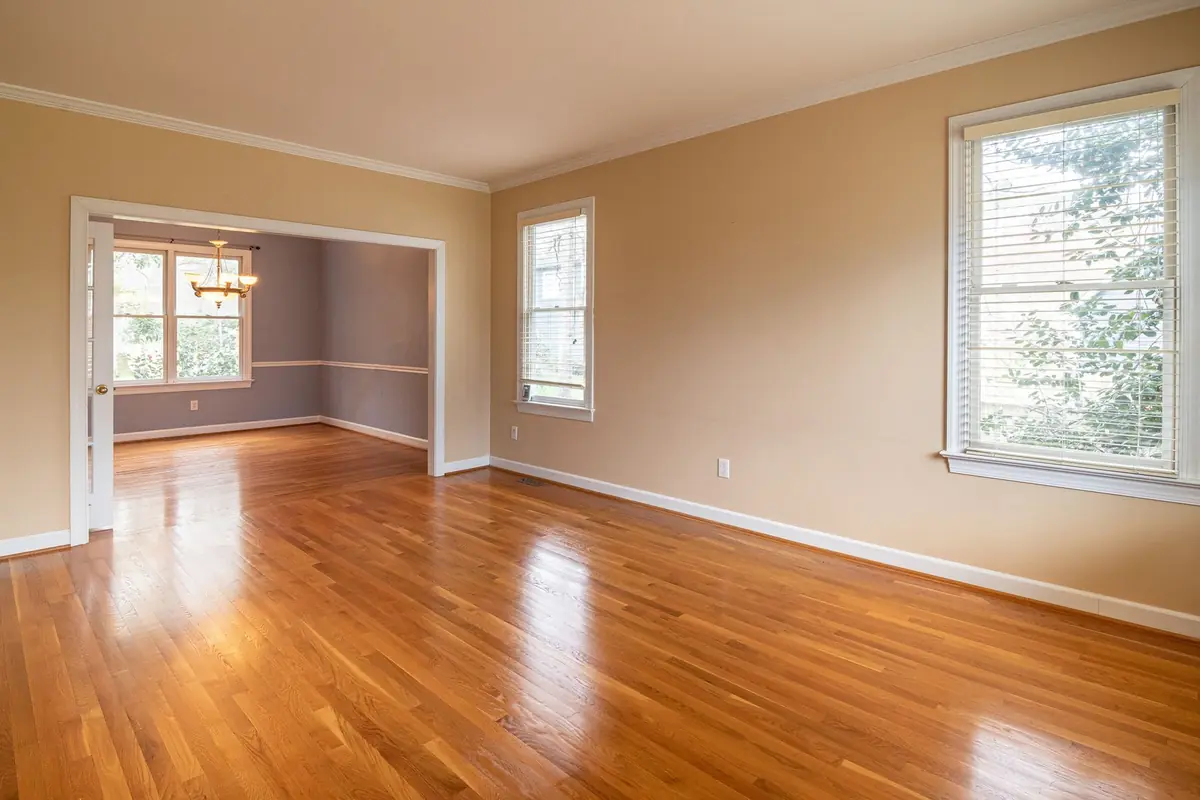
Engineered hardwood glued down over a Cape Coral slab usually costs $8–$16 per square foot installed, depending on species, plank width and finish. It is real wood you can see and feel, built on a layered core that copes with Florida humidity far better than solid boards.
Wood is the one floor where we will slow a job down rather than rush it. The slab has to be tested, the adhesive has to suit the reading, and the house has to be kept within the humidity range the maker asks for. Do those three things and wood is a beautiful, long-lived floor here.
Why engineered, not solid, on a slab
Solid hardwood is one piece of timber that swells and shrinks across its width with every change in humidity. Nailed to a wooden subfloor up north, it copes. Over Florida concrete, with damp coming up from below and a wet season outside, it cups and gaps. Engineered boards have a real-wood top layer bonded over cross-laid plies or a stable core, so they move far less. That is why we install engineered wood on slabs and do not recommend solid.
Moisture first, then adhesive
We measure the slab with in-place relative-humidity probes, the ASTM F2170 method, which reads deeper than a surface meter. Many wood adhesives are rated to roughly 75 percent relative humidity in the slab; above that we use an adhesive with a built-in moisture barrier or put down a separate membrane. The choice depends on the reading and on your board maker’s instructions, and we tell you which we used.
Choosing boards
Three choices shape how the floor looks and wears:
- Wear layer. The thickness of real wood on top decides whether the floor can be sanded and refinished later. A thicker layer costs more and lasts longer.
- Width and length. Wide, long boards look calm in big Florida great rooms but show any unevenness in the slab, so they need more prep.
- Finish. Matte and wire-brushed finishes hide sand scratches and paw marks far better than glossy ones. Lighter oak and hickory tones also hide dust.
Where we would not put wood
We will tell you straight if a room is wrong for wood: full bathrooms, laundry rooms, the floor right inside a pool door, and covered lanais. For those spaces we suggest wood-look tile or LVP that matches the color of your wood, with a neat transition where they meet.
How a wood install day runs
Boxes arrive and sit in the air-conditioned house to acclimate as the maker directs. The slab is cleaned, ground smooth where needed and primed if the adhesive calls for it. Boards are spread with a notched trowel, rolled or weighted so they bond fully, and left to cure before baseboards go back on and furniture returns. We walk the floor with you and leave the leftover boards labeled for future repairs.
Estimated engineered hardwood prices
| Job | Estimated price | What moves it |
|---|---|---|
| Engineered hardwood, glue-down | $8–$16/sq ft | Species, width, wear layer |
| Moisture testing (whole home) | $150–$450 | Number of probes, home size |
| Slab grinding or leveling | $3–$7/sq ft of area | Flatness needed for wide boards |
| Old tile taken up first | $3–$6/sq ft | Thinset or mud bed |
| Stair treads and nosing | $60–$150 per step | Open sides, matching nosing |
Wood prices swing more than any other floor because the boards vary so much. Use these ranges to plan, then expect a firm number in writing after we test the slab and you pick a board. See the cost guide.
Common questions
Can engineered hardwood be refinished?
Yes, if the real-wood wear layer is thick enough. Thinner layers can be screened and recoated once or twice; thicker ones can be fully sanded. We tell you which you are buying.
Is engineered hardwood OK in a kitchen?
With a durable finish and a mat at the sink, many people use it happily in kitchens. Spills need wiping up, and a slow dishwasher leak will damage it.
Can it float instead of being glued down?
Some engineered products are made to float over a pad. On a slab we usually glue, because it feels solid and sounds like real wood underfoot, but floating is an option where the maker allows it.
Last reviewed October 8, 2026.