
Taking up old tile from a Cape Coral slab usually costs $3–$6 per square foot where it was set on thinset, and $5–$12 where it sits on a thick mortar bed. Grinding and self-leveling the slab afterwards typically adds $3–$7 per square foot of the area that needs it. This is the work under the floor, and it is what decides how the new one turns out.
We do it ourselves, as part of the same job as the install, so nobody hands you a “ready” slab that isn’t.
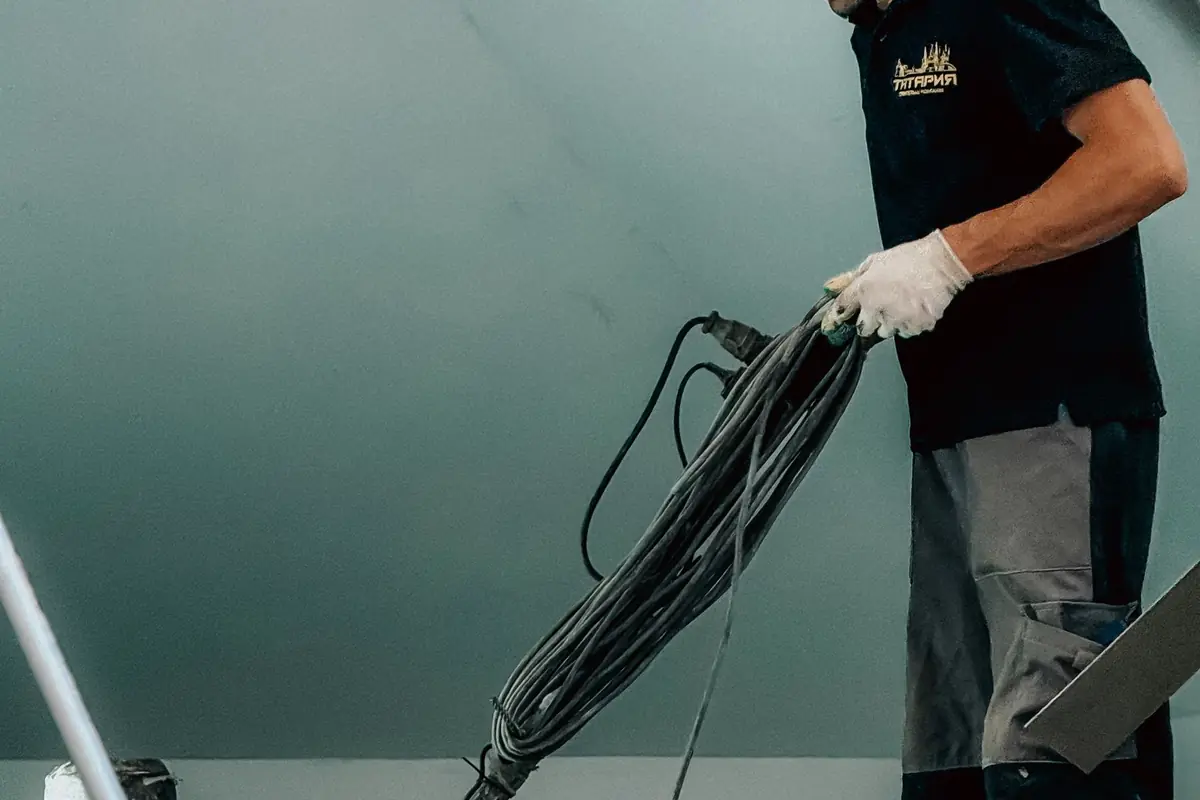
Tile removal in Cape Coral homes
A lot of Cape homes were tiled wall to wall when they were built, and that tile was usually set straight onto the slab. Lifting it is loud, heavy work, and the real job is what is left behind: ridges of old thinset that must come off before a new floor can go down flat. We break out the tile, grind the thinset back to sound concrete and vacuum as we go. Dust-contained removal, with shrouded grinders on HEPA vacuums, adds roughly $1–$3 per square foot and keeps the rest of the house far cleaner.
We cover vents, seal doorways with plastic, protect the floors we are not touching, and haul everything away. Carpet, glued-down wood and old vinyl come up too; carpet is the cheap one at about $0.50–$1.50 per square foot.
Slab leveling
Concrete slabs are rarely flat enough for modern flooring straight from the tile. We check with a long straightedge and a laser, then grind the high spots down and fill the low ones with patch or a self-leveling underlayment poured to feather out the dips. How flat is flat enough depends on what goes down next: long rigid planks and large tiles need a tighter tolerance than small tile. Your quote says which areas need work and how much.
Moisture testing and vapor barriers
Damp moves up through concrete all the time, and slabs near the water table carry more of it. Before glue-down plank, wood or any adhesive goes down, we test. The ASTM F2170 method drills small holes, sets relative-humidity probes in the slab and reads them after they settle, which shows conditions inside the concrete rather than just on top. We compare the result with the limit in your flooring and adhesive instructions and, if the slab reads high, specify a moisture-mitigation primer, a membrane, or an adhesive rated for it.
Cracks in the slab
Hairline shrinkage cracks are normal in Florida slabs and are rarely structural. Under a floating floor they usually do not matter. Under tile they do, because a crack can telegraph straight through the grout. We fill them and bridge them with a crack-isolation membrane before tile is set. A crack that is wide, stepped or growing is a question for a structural engineer, and we will say so.
Water-damaged floor replacement
After a burst supply line, an AC overflow or storm water, the first job is getting the wet flooring out and the concrete dry. We remove the damaged floor, take moisture readings on the slab and keep checking until it is back within range before a new floor goes down. If walls or cabinets are wet too, a drying or mold specialist should handle that part first, and we will work around their schedule.
We photograph the damage, measure the affected area and give you an itemized quote you can pass to your insurance company. Whether the policy pays, and how much, is your adjuster’s decision, not ours.
Permits in Cape Coral
Do not assume a floor replacement needs no paperwork. Under Florida’s small-project rules, Cape Coral may treat replacing flooring and tile as exempt from a permit below a set contract value, but the city still asks for a written exemption request before work begins. Well over half of Cape Coral properties also sit in the flood zone, where the rules can be stricter. We check your address with the Building Division before we quote, and include whatever it needs.
Estimated removal and prep prices
| Job | Estimated price | What moves it |
|---|---|---|
| Tile removal, thinset on slab | $3–$6/sq ft | Tile size, bond strength |
| Tile removal, mud bed or heavy thinset | $5–$12/sq ft | Bed depth, grinding time |
| Dust-contained removal (added) | $1–$3/sq ft | Containment, HEPA vacuums |
| Carpet and pad removal | $0.50–$1.50/sq ft | Tack strip, disposal |
| Grinding and self-leveling | $3–$7/sq ft of area | Depth of dips, area treated |
| Moisture testing | $150–$450 per home | Home size, number of probes |
Removal is the line most likely to change once we see the floor, because nobody knows how thick the old mortar is until a tile comes up. These are estimates; the quote states what we found and what we priced. Full flooring cost guide.
Common questions
Is dustless tile removal really dust-free?
No removal is completely dust-free. Shrouded grinders on HEPA vacuums capture most of it, and sealed doorways keep the rest of the house far cleaner than open breaking and sweeping.
Can I stay home while tile is removed?
Many people do, in rooms away from the work. The noise is the hard part; most people find the loudest days easier if they are out.
How long does self-leveler take to dry?
Many products take foot traffic within hours and accept flooring within a day or so, depending on depth and the maker. We follow the product’s timing.
Do I need a permit to replace my floors in Cape Coral?
It depends on the job value and your address. Small floor replacements may be exempt, but the city asks for a written exemption request first, and flood-zone homes can need a permit. We check before quoting.
Last reviewed October 8, 2026.